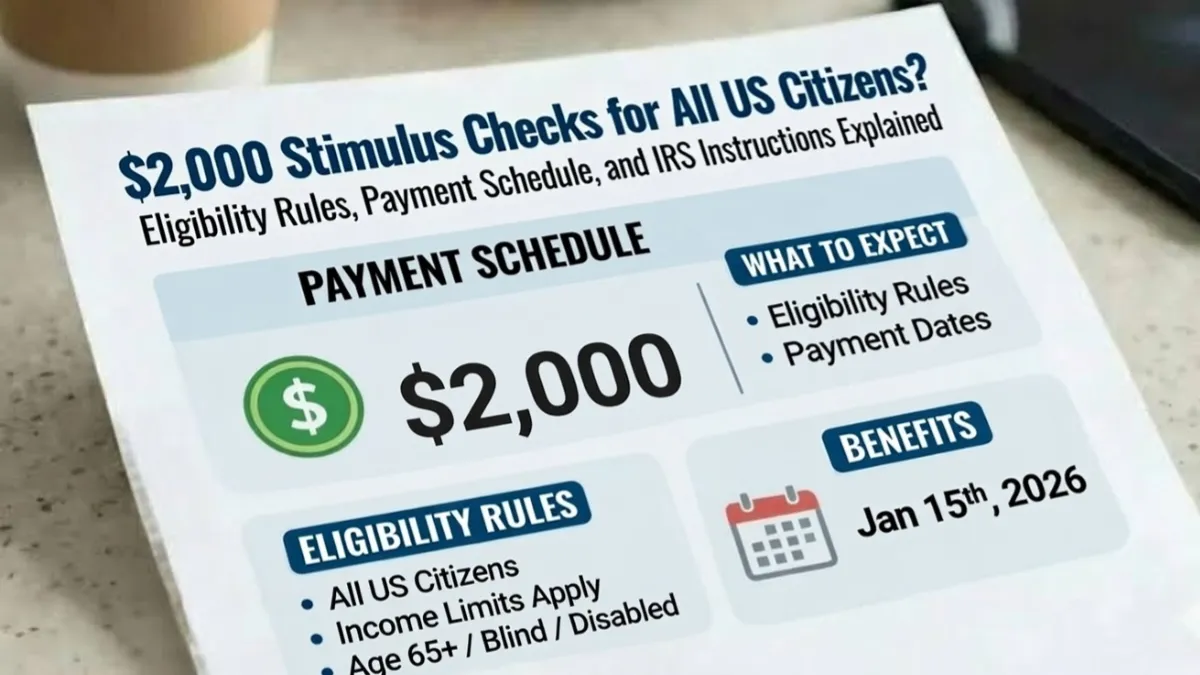
$2,000 stimulus checks has been spreading fast across social media and search results, leaving many Americans confused and hopeful at the same time. As of now, there is no official announcement confirming that $2,000 stimulus checks are being sent to all U.S. citizens. Much of the noise comes from old relief programs, proposed bills, and online misinformation. That said, understanding how stimulus payments usually work can help people stay prepared and avoid scams. This article breaks down the current situation, what eligibility rules typically look like, how payment schedules are handled, and what the IRS usually asks people to do.
Understanding the Current Status of the $2,000 Stimulus Checks
At this moment, the federal government has not approved a new nationwide $2,000 stimulus check program. Any official stimulus payment requires approval from Congress and confirmation from the IRS or U.S. Treasury. While discussions about economic relief do happen from time to time, especially during periods of financial pressure, not every discussion turns into a real payment. Many viral posts mix old stimulus details with new dates, which creates confusion. It’s important to rely only on official government sources for confirmation, not screenshots or forwarded messages claiming payments are guaranteed.
How Eligibility Usually Works for Stimulus Payments
Although there is no confirmed $2,000 payment right now, past stimulus programs followed similar eligibility patterns. These rules help determine who qualifies and who does not. Eligibility is usually based on income, tax filing status, and residency rather than citizenship alone. People who filed federal tax returns typically receive payments automatically if they qualify. Dependents and family size can also impact the total amount received.
| Eligibility Factor | Typical Requirement |
|---|---|
| Income Level | Below IRS-set thresholds |
| Tax Filing | Recent tax return filed |
| Residency | U.S. resident |
| Dependents | Additional amount per child |
| Payment Method | Direct deposit or mailed check |
Expected Payment Schedule If a Program Is Approved
If a new stimulus program were approved in the future, payments would not arrive instantly. The IRS usually follows a phased rollout. Direct deposit recipients receive money first, followed by paper checks and prepaid debit cards. The process can take weeks or even months depending on how updated a person’s tax information is. Anyone expecting fast same-day payments should be cautious, as that is often a red flag for scams. Government payments always follow an official schedule announced publicly.
IRS Instructions Americans Should Always Follow
Whether or not new stimulus checks are approved, the IRS offers consistent guidance that helps people stay prepared. Keeping tax records up to date is the most important step. Filing taxes on time ensures the IRS has correct income and bank details. People should never share Social Security numbers or bank details through phone calls, emails, or social media messages claiming to be from the IRS. The IRS does not contact taxpayers this way. Staying informed through official IRS channels is the safest approach.
Some important IRS reminders include
File your federal tax return even if income is low
Update direct deposit information with the IRS
Ignore messages asking for personal details
Check IRS announcements for verified updates
Final Thoughts on the $2,000 Stimulus Check Claims
While the idea of $2,000 stimulus checks for all U.S. citizens sounds appealing, there is currently no confirmed program offering this payment. Staying informed, cautious, and realistic is the best approach. Economic relief programs do happen, but they are always officially announced and clearly explained by the government. Until then, Americans should avoid misinformation, keep their tax records current, and rely only on trusted sources. Being prepared matters more than believing unverified promises.